Hokkaido Travel Guide: How to Plan Your Trip, Get Around, Eat Well, and Travel Smart

Hokkaido rewards travelers who plan ahead. The island is vast, its seasons are distinct, and the best way to move around depends heavily on where you want to go. That is exactly why a first-trip plan for Hokkaido should start with a few practical decisions: which region to focus on, when to visit, and whether you will rely on trains, buses, flights, or a rental car.
If you get those basics right, the rest becomes much easier. You can spend more time enjoying the scenery, food, and culture, and less time figuring out long-distance logistics.
Why Hokkaido feels different from other Japan trips
Hokkaido is not a place to squeeze into a rushed itinerary. The distances between major sights can be long, and many of the island’s highlights are spread across separate regions. A quick look at the map can be misleading, so it helps to think in terms of travel time rather than just destination names.
For many travelers, the biggest takeaway is simple: if you only have five to seven days, it is usually better to focus on one or two regions instead of trying to circle the whole island.
How big Hokkaido is and why distance matters
Hokkaido is enormous, and that scale affects almost every part of trip planning. Some of the better-known routes take hours each way, even when they look manageable on a map.
For example, the drive from Sapporo to Hakodate takes about 4 to 5 hours one way, while going east toward the Shiretoko Peninsula can take 5 to 6 hours or more. Even shorter hops still add up: Otaru is about 40 km from Sapporo, Furano about 115 km, Asahikawa about 140 km, and Hakodate about 305 km.
That is why Hokkaido works best when you build a route around one area rather than trying to see everything at once.
How to choose the right region
A useful way to plan Hokkaido is to divide it into four broad regions. Each has its own style, and the best choice depends on the kind of trip you want.
Central Hokkaido
This is the easiest starting point for many first-time visitors. Sapporo is the main base, with Otaru nearby and places like Furano, Biei, and Niseko within a wider central route. This area works well if you want a mix of city time, food, and classic scenic stops.
Southern Hokkaido
Southern Hokkaido centers on Hakodate and Lake Toya. It is a strong choice for travelers who want historic streets, famous night views, seafood markets, and hot spring stays.
Northern Hokkaido
Northern Hokkaido is anchored by Asahikawa and stretches toward Wakkanai. It is a good fit for travelers drawn to open landscapes, wildlife, hot springs, and a more remote atmosphere.
Eastern Hokkaido
Eastern Hokkaido is the region for raw nature and deeper exploration. Shiretoko, the Kushiro Marsh, and Abashiri are among the major names here. If your priority is scenery, wildlife, and more space between destinations, this region stands out.
Best time to visit Hokkaido
Hokkaido changes dramatically by season, and the best time to visit depends on what kind of trip you want.
Summer
Summer is the season for escaping Japan’s heat. It is also the time for flower fields, including Furano’s lavender and Biei’s colorful hills. In Sapporo, temperatures are described as refreshingly cool, but evenings can drop quickly, so a light sweater or hoodie is useful.
Winter
Winter is the island’s signature season for snow scenery, skiing, and ice-related experiences. It is also the best-known season for major winter events and deep snow conditions. Because sidewalks can be icy, proper winter footwear matters.
Autumn
Autumn brings vivid foliage, especially in the Daisetsuzan range. If you enjoy color and cooler temperatures without full winter conditions, this is a strong option.
Spring
Spring in Hokkaido arrives late compared with many other parts of Japan. May is known for the island’s later cherry blossoms, and in some places snow can still linger nearby, creating a distinctive seasonal contrast.
How to get around Hokkaido
The right transport choice depends on your route, your group size, and how much flexibility you want.
JR trains
JR is a good fit for city-based travel such as Sapporo, Otaru, Hakodate, and Asahikawa. Trains are comfortable and remove the stress of winter driving. They also let you enjoy the scenery without focusing on the road.
The trade-off is that some rural routes have limited departures, and reaching remote attractions may require a bus connection.
Highway buses
Buses can be a practical, lower-cost option. They may take longer than JR, but fares are often lower, and some routes are frequent enough to work well for planners who are willing to spend more time in transit.
Domestic flights
For long distances, flights can make sense, especially between Sapporo and eastern Hokkaido destinations. When available, they are the fastest and most comfortable option for covering major gaps.
Rental car
A rental car gives the most flexibility, especially if you want to reach scenic spots that are harder to access by public transport. This can be especially useful in eastern Hokkaido and for travelers going beyond the most obvious city stops.
The main caution is distance. Hokkaido is large enough that long drives can wear you down, so it is worth keeping your route realistic and leaving buffer time.
When a rail pass makes sense
Rail passes can be useful for itineraries that include several longer intercity journeys. They are less appealing if your trip is centered on shorter routes.
If your plan is mainly Sapporo, Otaru, and nearby stops, paying per ride may be simpler and more economical. If you are going farther afield, the pass may become easier to justify.
One thing to watch is seat reservations. Some limited express services in Hokkaido require reservations, so it is worth checking train rules carefully when you build your itinerary.
Winter driving basics
Driving in Hokkaido is not mainly about narrow roads or difficult city layouts. The bigger issue is winter conditions.
Black ice is the most serious hazard mentioned for winter driving. Roads may look merely wet, but they can be covered with a thin layer of ice. Extra caution is especially important near bridges, tunnel exits, and intersections.
Wildlife is another factor in rural and eastern areas. Ezo deer and red foxes can appear suddenly on the road, particularly at dawn and dusk.
If you plan longer drives, toll costs can also matter. The Hokkaido Expressway Pass may be worth considering through a rental company if your route includes substantial highway use.
What to eat in Hokkaido
Food is one of the strongest reasons to plan carefully for Hokkaido, because local specialties vary by region.
Seafood is a major highlight, with crab often treated as the star. The island also has regional seafood specialties such as squid from Hakodate, sea urchin and mantis shrimp from Otaru, Pacific saury from Kushiro, and salmon from eastern Hokkaido.
Beyond seafood, Hokkaido is known for Jingisukan, a grilled lamb dish, as well as zangi, the local style of fried chicken. Meat lovers can also look for regional beef and pork names linked to the island.
Dairy products are another major draw. Hokkaido is associated with soft-serve ice cream, cheese, butter, and sweets made with local dairy.
Seasonal produce is also worth seeking out. Summer corn, asparagus, winter baked potato with butter, and local grains such as wheat and rice all appear in the food landscape.
If you like noodles, Hokkaido’s well-known ramen styles give you another reason to plan by region: Sapporo for miso ramen, Asahikawa for soy sauce ramen, and Hakodate for salt ramen.
Best souvenir categories
Hokkaido souvenirs are easy to plan around if you think in categories rather than trying to choose one item on the spot.
Snacks and sweets
Classic Hokkaido sweets remain a big part of many travelers’ shopping lists. The island is known for a wide range of confectionery gifts, including chocolate, butter-based sweets, baumkuchen, rice crackers, and limited-edition treats.
Seafood products
If you want something savory, preserved seafood is a practical option. Dried salmon strips, scallop products, and smoked seafood are among the categories mentioned as easy-to-find edible gifts.
Dairy products
Travel-friendly cheeses and cultured butter are another useful souvenir direction, especially if you want something that reflects Hokkaido’s dairy reputation.
Alcohol
Local sake and beer are also popular. Hokkaido’s alcohol options include regional sake labels and beer varieties associated with the island.
Lifestyle goods and skincare
Lavender goods from Furano and mint oil from Kitami are classic non-food souvenirs. Skincare made with local ingredients such as horse oil, glacial clay, and botanical extracts is another category worth checking.
Cash, cards, and payment habits
Hokkaido is increasingly cashless in major cities, but that does not mean you can ignore cash.
In places like Sapporo, Hakodate, and Asahikawa, cards, mobile payments, and IC transit cards are widely used at many department stores, drugstores, convenience stores, and taxis. Some newer venues are fully cashless.
Outside the cities, the picture changes. Rural areas, traditional inns, family-run restaurants, certain buses, and some morning markets may still rely on cash. It is also useful to keep small change for buses.
A mixed approach is the safest option: use cards and mobile payments where possible, but carry enough cash for places where digital payments are not accepted.
Culture, festivals, night views, and deeper experiences
If your trip is not only about transit and food, Hokkaido also offers cultural and scenic experiences that are worth building into your route.
Night views
Hakodate’s night view is the classic one, but Sapporo and Otaru also offer memorable after-dark scenery. Sapporo’s Mount Moiwa is especially useful if you want a city night view, while Otaru’s Mount Tengu offers a quieter outlook.
Ainu culture
For travelers who want a deeper cultural visit, Upopoy in Shiraoi is the key place mentioned for learning about Ainu history and traditions. It includes museum exhibits, performances, and hands-on programs.
Festivals
Hokkaido has seasonal festivals throughout the year, including winter snow and ice events, spring celebrations in Hakodate, summer dance festivals and local parades, and autumn food-focused gatherings.
Who Hokkaido is best for
Hokkaido works well for travelers who want more than a standard city break.
It is a strong choice for people who enjoy seasonal travel, scenic drives, regional food, hot springs, and outdoor landscapes. It also suits travelers who are willing to choose a smaller route and let the island’s scale shape the trip rather than fight against it.
If your trip is short, independent travel still works, but a guided tour may reduce stress if you do not want to manage transport yourself. That can be especially helpful in winter or if you are traveling with older family members or young children.
How to include Hokkaido in a Japan itinerary
The simplest way to plan Hokkaido is to decide what kind of trip it should be before you book everything else.
If you want city time, food, and easy transport, base yourself in central Hokkaido. If you want famous views and onsen, look south. If you want more wilderness, go east or north.
For a first trip, the safest strategy is usually to build around one main region and add only one or two major side trips. That approach gives you more time on the ground and less time in transit.
Travel tips
- Plan around distance, not just map position.
- Check transport schedules in advance if you are using rural rail or bus routes.
- If you drive in winter, allow extra time and stay alert for black ice.
- Carry cash even if you expect to use cards most of the time.
- Pack for changing weather, especially if you are traveling between regions.
- Leave space in your itinerary so you can enjoy the journey itself.
FAQ
How big is Hokkaido and how should that affect my itinerary?
Hokkaido is very large, and many major sights are far apart. For a short trip, it is usually better to focus on one or two regions rather than trying to cover the whole island.
What is the best season to visit Hokkaido?
It depends on your priorities. Summer is good for cooler weather and flowers, winter for snow and skiing, autumn for foliage, and spring for late cherry blossoms.
Should I travel around Hokkaido by train or rental car?
JR works well for city-based travel, while a rental car is better for flexible regional trips and harder-to-reach scenic areas.
Is the rail pass worth it?
It can make sense if your itinerary includes several longer intercity journeys. For shorter routes, individual tickets may be the better option.
Can I use cards and mobile payments everywhere?
Not everywhere. Major cities are much more cashless, but rural areas, local buses, older inns, and family-run shops may still require cash.
Is Hokkaido better for independent travel or guided tours?
Both can work. Independent travel is better if you want flexibility, while a guided tour can be helpful for short trips or winter travel.
Final planning note
Hokkaido is too large to treat casually, but that is part of its appeal. Once you choose the right region, season, and transport style, the island becomes much easier to enjoy. If you are still deciding how to shape the route, this is the kind of destination where a custom itinerary can save time and help you build a trip that feels realistic from the start.
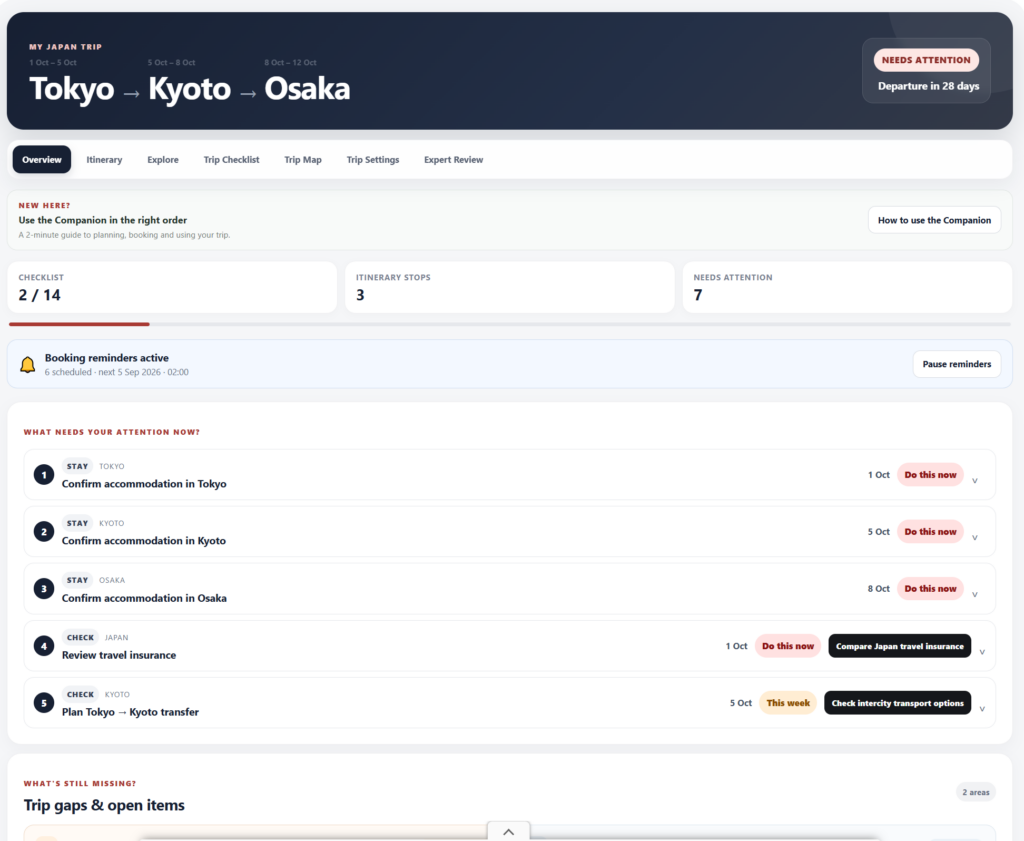
JAPAN TRAVEL COMPANION
Know What to Book — and When
Add your travel dates and destinations to see what needs booking, when tickets open and what to plan next.
✓ Personalized booking timeline
✓ Trip checklist and itinerary
✓ Planning reminders