What to Do in Aomori in Fall: Best September, October, and November Activities
What to Do in Aomori in Fall: Best September, October, and November Activities
Introduction
Aomori in fall changes quickly from month to month, which is exactly why it works so well for trip planning. September brings harvest season and a strong festival calendar. October shifts into foliage, food events, and the last chances for some outdoor activities. By early November, the season turns toward winter, but there are still plenty of things to do, from illuminations and markets to museums and indoor cultural stops.
If you are building an Aomori autumn travel itinerary, the best approach is to match your trip dates to the season’s rhythm rather than trying to see everything at once.
Why Aomori works well for a fall trip
Aomori’s fall calendar is spread across the prefecture, so travelers can combine city events, countryside scenery, harvest experiences, and museum visits without needing to stick to one type of sightseeing.
For longer-distance travel, the JR East Pass can be useful for reaching Aomori by JR trains and Shinkansen services. For local sightseeing, renting a car is recommended, especially if you want to reach places such as Lake Towada, Moya Hills, and Mount Osore. A practical route is to use the train to get to Shin-Aomori Station or Hachinohe Station, then continue by car for countryside travel.
September: festivals, apples, and late-summer energy
September is one of the busiest months for Aomori fall festivals, especially in the Hirosaki and Towada areas.
Major September festivals worth prioritizing
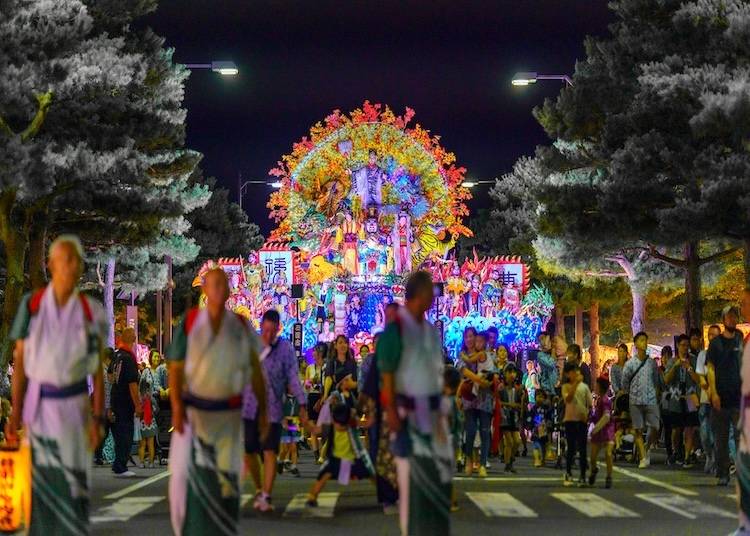
Towada City Autumn Festival brings floats, mikoshi, festival music, and group dances into the streets over three days. Daytime processions let you see the floats in detail, while the evening program adds a different atmosphere after dark.
Gonohe Festival combines shrine observances with ornate floats, music competitions, traditional dancing, nighttime floats, and Oshu Yosakoi. The festival mixes daytime procession viewing with evening performances, so it works well for travelers who want a fuller traditional festival experience.
Shichinohe Autumn Festival welcomes the start of fall with handmade floats, mikoshi, taiko, and street festivities. Its ema furyu floats are built around narrative themes, which makes the festival feel especially rich in detail.
In Hirosaki, September also has a more modern festival side:
- Yosakoi Tsugaru turns part of Dote-machi into an open-air performance space.
- SHIROFES. combines street dance, music, traditional culture, sports, and art in Hirosaki Park.
- RINGO MUSIC FES. uses Hirosaki Apple Park as an outdoor music venue during harvest season.
If your trip is centered on live atmosphere and event energy, September is the strongest month to prioritize.
Apple harvest season in Hirosaki
September is also squarely inside the apple harvest season in Hirosaki. At Hirosaki Apple Park, visitors can join a guided apple-picking experience. The varieties available change as the season progresses, so the fruit you can pick depends on ripeness at the time of your visit.
Individual visitors can register on the day, while groups need advance reservation. The experience is short and straightforward, making it easy to combine with other Hirosaki sightseeing.
Early September and late-summer outdoor options
If you want outdoor activities rather than festivals, September still offers a few seasonal choices. Lake Towada SUI SUI SUP continues through mid-October, and the Moya Hills Auto Campground remains open through late October. These are useful additions if you want to shape a more active Aomori itinerary.
September museum stops for rainy days
September is also a good month for museum time, especially if rain interrupts outdoor plans.
Useful indoor options include:
- Aomori Museum of Art
- Hirosaki Museum of Contemporary Art
- Sannai-Maruyama Site Center
- Hachinohe Art Museum
These are especially helpful if you want to keep your trip flexible around weather.
October: foliage, food, and the final stretch of outdoor season
October is when Aomori fall travel becomes more visibly seasonal. The trees change, some harvest experiences continue, and several outdoor activities begin their final operating period.
The last chance for some seasonal experiences
Early October is especially important for Inakadate Village Tanbo Art. The rice paddy art remains on display into the first half of October, but one venue is closed on October 4, so early October visitors should check their timing carefully.
October is also the final month for Shirakami Mountains Anmon Falls & Beech Forest Trek, which combines a guided walk through beech forest and the Anmon Valley area.
For water-based outdoor fun, Lake Towada SUI SUI SUP continues only until mid-October. If SUP is part of your trip wish list, October is the month to prioritize.
Apple picking continues
October remains a strong month for Hirosaki apple harvest. The park’s picking experience is still running, and the available varieties change as different apples ripen through the month. This makes October a very practical time for travelers who want to fit in both harvest season and foliage sightseeing.
Food and autumn market events
October also brings more food-focused seasonal events.
Handmade Village Risokyo is one of the clearest autumn options, with late-season cosmos on display through October 18. On that same day, it also serves a special freshly prepared soba meal made from buckwheat grown at the venue. Because reservations are required, this is the kind of stop that works best when it is planned in advance.
Nambu Night Market adds another seasonal evening option, with food, specialty products, shopping, and hands-on booths. The October edition also includes a Halloween-themed promotion.
Takko Garlic and Beef Festival is another standout food event, combining barbecue sets, roasted beef, garlic products, local specialties, and stage events.
October exhibitions and museum planning
October is especially useful for travelers who want to balance outdoor sightseeing with indoor culture.
At Aomori Museum of Art, the 20th anniversary exhibition and the 2026 collection exhibition both continue into late September, so early autumn visitors still have a chance to see them before they end.
At the Hirosaki Museum of Contemporary Art, the major exhibition and collection display continue through November 15. That makes the museum a reliable fallback if your travel dates overlap with a rainy day or if you want a slower half-day in Hirosaki.
At Sannai-Maruyama Site Center, the special exhibition runs until October 12, and the exhibition admission also includes access to the archaeological site.
Early November: foliage peaks, illuminations begin, and the season turns
By November, Aomori’s fall season begins moving toward winter, but it does not lose interest. Instead, the focus shifts toward foliage viewing, illuminations, markets, indoor attractions, and late harvest experiences.
Best early November foliage options
The biggest November draw is the Hirosaki Castle Chrysanthemum and Autumn Leaves Festival. Hirosaki Park combines foliage, floral displays, and evening illumination, and visitors can also see the scenery from the Middle Moat sightseeing boat.
If you want a second foliage stop, Hirakawa Autumn Leaves Festival at Saruka Park is scheduled for late October into early November, with free admission and additional seasonal activities.
Another strong late-autumn sight is the Kita-Kanegasawa Giant Ginkgo Light-Up in Fukaura. The tree becomes especially striking during the light-up period, and the site can be reached on foot from JR Kita-Kanegasawa Station.
Early November food and market experiences
Early November is also a good time for local markets.
Tatehana Wharf Morning Market continues on Sundays through the month and offers a wide range of food and breakfast options.
Tsugaru City Food and Industry Festival is planned for early November, bringing local agriculture, food, manufacturing, and retail together in one venue.
Late-season sports and indoor options
If you prefer activity to foliage, November still has sports and indoor culture to fill the itinerary.
- Mutsu Bay Rogaining Ride continues until November 5.
- ReinMeer Aomori has November home matches.
- Aomori Wat’s also have November home games in several parts of the prefecture.
For weather-proof sightseeing, museum visits remain one of the easiest ways to spend a November day in Aomori.
Apple harvest experiences in Hirosaki
If you are looking for one signature Aomori autumn activity, apple picking is hard to ignore.
At Hirosaki Apple Park, the harvest experience runs from August through around mid-November, subject to crop conditions. Individual visitors can register on the day, and the experience includes guidance from staff. The apples are weighed and purchased afterward, so this is a hands-on seasonal activity rather than a casual tasting stop.
This works especially well if you are building a Hirosaki fall travel day that also includes the park area, nearby food, or a festival visit.
Traditional festivals to plan around
Aomori’s fall festivals are one of the easiest ways to shape a trip.
For early September, the main names to watch are:
- Towada City Autumn Festival
- Gonohe Festival
- Shichinohe Autumn Festival
In Hirosaki, the most notable September events are:
- Yosakoi Tsugaru
- SHIROFES.
- RINGO MUSIC FES.
If your trip lands in October or early November, the seasonal focus shifts more toward foliage events, markets, and harvest-related programming than large street festivals.
Outdoor activities for travelers who want more than festivals
Aomori’s fall season is not only about events. It also offers several outdoor activities that fit well into a flexible itinerary.
Useful options include:
- Lake Towada SUI SUI SUP before mid-October
- Shirakami Mountains Anmon Falls & Beech Forest Trek through October
- Moya Hills Auto Campground through late October
- Mutsu Bay Rogaining Ride into early November
These activities are especially useful if you want to shape an Aomori itinerary around nature and movement rather than only city sightseeing.
Museums and indoor fall options
For colder or rainy days, Aomori has a strong set of indoor attractions that still feel seasonally relevant.
Hirosaki Museum of Contemporary Art
The museum’s exhibition calendar makes it one of the most useful indoor stops in autumn. Since the same admission ticket covers both the Sachiko Kazama exhibition and the collection exhibition, it is easy to plan as a single visit.
Sannai-Maruyama Site Center
This is a good choice if you want a blend of exhibition space and archaeological site. The special exhibition also gives visitors a reason to spend time outdoors on the same ticket.
WA RASSE and Tsugaruhan Neputa Village
These are the easiest places to experience Aomori’s well-known festival traditions outside the summer season.
- WA RASSE introduces Nebuta music, movement, floats, and festival films.
- Tsugaruhan Neputa Village offers full-size Neputa floats, performances, crafts, and optional paid workshops.
Together, they are especially useful if your fall trip includes a rainy day or you want a cultural stop that does not depend on the weather.
Practical travel tips for Aomori in fall
Aomori fall travel is easiest when you plan around three things: dates, transport, and seasonality.
- Check event calendars before you go, especially for anything in early November.
- Use rail for longer arrivals, then consider a car for scenic areas and countryside spots.
- Build your itinerary around fixed-date events first, then fill in flexible museum or market visits.
- If you want apple picking, festival viewing, and foliage in one trip, October is often the most balanced month.
- If your dates are later in the season, indoor attractions become especially valuable.
Best timing by month
September is best for:
- big festivals
- apple harvest season
- outdoor culture events in Hirosaki
- early autumn travel with the most variety
October is best for:
- foliage
- food events
- apple picking
- final outdoor activities before winter
Early November is best for:
- Hirosaki foliage
- illuminations
- markets
- museums and indoor cultural visits
FAQ
What is the best month to visit Aomori in fall?
It depends on what you want to do. September is strongest for festivals, October is best for foliage and harvest activities, and early November is good for autumn scenery, illuminations, and indoor sightseeing.
Is a car necessary for seeing autumn spots in Aomori?
Not always, but a car is recommended for scenic places such as Lake Towada, Moya Hills, and Mount Osore. Train travel is useful for getting into the region first.
Can travelers pick apples in Hirosaki in autumn?
Yes. Hirosaki Apple Park offers a guided apple harvest experience through around mid-November, subject to crop conditions.
Which Aomori festivals happen in September?
Towada City Autumn Festival, Gonohe Festival, Shichinohe Autumn Festival, Yosakoi Tsugaru, SHIROFES., and RINGO MUSIC FES. are all September events covered here.
What should travelers do in Aomori if it rains in fall?
Museum visits and indoor cultural attractions are the easiest fallback options, especially Aomori Museum of Art, Hirosaki Museum of Contemporary Art, Sannai-Maruyama Site Center, WA RASSE, and Tsugaruhan Neputa Village.
Are there any fall festivals in Hirosaki and Towada?
Yes. Hirosaki has several September events and the Hirosaki Castle Chrysanthemum and Autumn Leaves Festival later in the season, while Towada hosts its autumn festival in early September.
What autumn activities are still available in early November?
Early November still offers foliage events, markets, museum visits, illuminations, and some late-season sports and outdoor activities, depending on the exact dates of your trip.
How to plan an Aomori fall itinerary
The simplest way to build an Aomori autumn route is to choose one anchor for each travel day:
- a fixed-date festival
- an apple harvest visit in Hirosaki
- a foliage stop in Hirosaki or Hirakawa
- a museum or indoor cultural venue
- an outdoor activity like SUP, trekking, or camping
That approach keeps the trip manageable even when the season is changing quickly.
If you want a smoother route across multiple cities, this is the kind of season-sensitive trip where a custom itinerary can help tie together transport, timing, and opening dates without wasting days in transit.