Narita Airport to Shinjuku: Compare the Easiest Train, Bus, Taxi and Transfer Options
Shinjuku is one of Tokyo’s busiest transport hubs, and that makes arrival day a real decision point for first-time visitors. If you are landing at Narita Airport and heading straight to Shinjuku, the best option depends less on one “perfect” route and more on what matters most to you: a direct ride, the lowest cost, fewer steps with luggage, or a door-to-door transfer.
Here is a practical way to choose.
Quick decision guide: which Narita to Shinjuku option fits your trip
- Choose the Narita Express if you want the simplest direct rail option with no transfers.
- Choose the Keisei Skyliner if you want faster train time and do not mind changing to JR lines.
- Choose the Keisei Main Line Limited Express if your main goal is keeping the train fare down.
- Choose the Airport Limousine Bus if you are staying at a hotel served directly by the bus or want an easier trip with large luggage.
- Choose the TYO–NRT Budget Bus if you want the lowest-cost route and are comfortable with a transfer.
- Choose a flat-rate taxi or private transfer if you want direct, door-to-door convenience, especially on a late arrival or with a group.
The easiest direct rail choice: Narita Express
For many travelers, the Narita Express is the clearest answer to the question of how to get from Narita Airport to Shinjuku with the least friction. It is a reserved-seat limited express train with a direct ride to Shinjuku Station and no transfer required.
That directness is the main reason it works well for travelers with luggage, JR Pass holders, and anyone who wants a calm first trip into Tokyo. The train includes large luggage storage areas, seats with a table and power outlet, and onboard guidance in multiple languages.
For the Narita to Shinjuku journey, the trip takes about 1 hour 20 minutes. The standard ordinary-car fare is 3,250 yen, while the Green Car costs 5,520 yen. A foreign visitor round-trip discount ticket is also available at around 5,000 yen for adults and 2,500 yen for children, with a passport required.
At Narita Airport, the train departs from Narita Airport Station for Terminal 1 and Airport Terminal 2 Station for Terminals 2 and 3. At Shinjuku Station, Narita Express trains usually arrive at JR platforms 5 or 6, and the easiest exits are the South Exit or New South Exit ticket gates.
This is the most straightforward rail option if you want to avoid thinking too hard after a long flight.
Fast rail, but with a transfer: Keisei Skyliner and Keisei Main Line
If you are comfortable changing trains, Keisei Railway offers two useful ways to reach Shinjuku via JR lines: the Skyliner and the Keisei Main Line Limited Express.
Both require a transfer at either Nippori Station or Keisei-Ueno Station to continue on JR lines toward Shinjuku.
Keisei Skyliner
The Skyliner is the fastest train option in pure airport-to-rail time, reaching Nippori in about 36 minutes. For the full trip to Shinjuku, including the JR transfer, the total journey can be as little as about 1 hour 10 minutes.
The total one-way adult fare is approximately 2,770 yen, made up of 2,570 yen for the Skyliner segment and around 200 yen for the JR transfer. That puts it below the Narita Express in price, while still keeping the total trip relatively quick.
The trade-off is the transfer itself. If you are carrying a lot of luggage or feel unsure about navigating Tokyo rail lines on arrival, the extra step can matter more than the time saved.
Keisei Main Line Limited Express
If your priority is the cheapest rail route, the Keisei Main Line Limited Express is the best fit. It also requires a transfer at Nippori, but the total one-way adult fare comes to about 1,490 yen, which is much lower than the direct express options.
The journey takes about 1 hour 40 minutes in total, so this is a slower choice. It suits travelers who are fine with a longer ride in exchange for lower cost.
For both Keisei options, e-tickets are available online, and physical tickets can also be bought at stations and airport counters. The Keisei Main Line is a standard limited express service with non-reserved seating, and transport IC cards such as Suica or PASMO can be used.
Best for hotel drop-off and heavy bags: Airport Limousine Bus
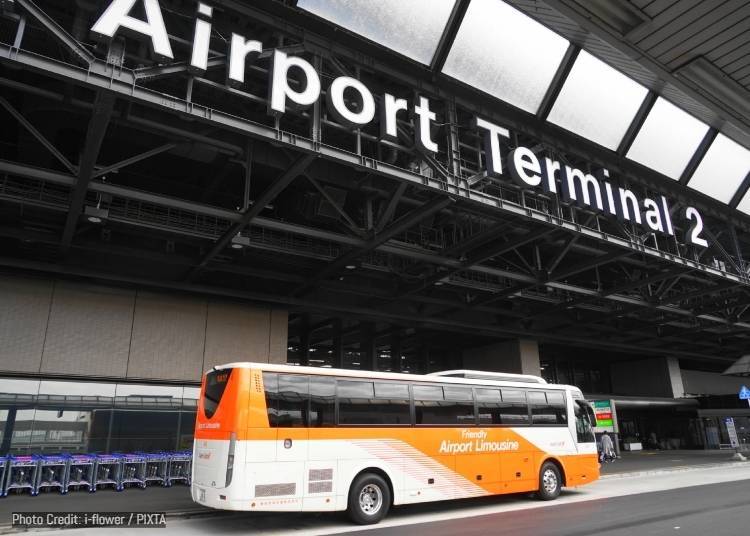
The Airport Limousine Bus is one of the most practical choices if you are staying at a hotel in the Shinjuku area that is directly served. Its biggest advantage is that it can take you straight to selected hotels without a train transfer, which makes arrival simpler when you have large suitcases.
This service also works well for families, groups, and travelers who want to avoid moving bags through busy stations. Seating is guaranteed, and luggage can be checked onto the bus. Some buses have restrooms, and free Wi-Fi is available.
The route includes stops at major hotels and key hubs in the Shinjuku area, including the Shinjuku Expressway Bus Terminal, and it can directly serve hotels such as Hotel Century Southern Tower, Shinjuku Sunroute Plaza Hotel, Hilton Tokyo, Shinjuku Washington Hotel, Hyatt Regency Tokyo, and Keio Plaza Hotel.
The journey usually takes around 2 hours, though traffic can change that significantly. The adult fare is 3,600 yen.
Advance booking is strongly recommended, and tickets can be reserved online or purchased at airport bus counters after arrival.
Lowest-cost option with a transfer: TYO–NRT Budget Bus
If your main concern is budget, the TYO–NRT Bus is the cheapest route mentioned here. It is not direct to Shinjuku, though, so you need to arrive at Tokyo Station, then transfer to the JR Chuo Line or another line to continue to Shinjuku.
That transfer is the key drawback. It adds walking and extra time, so this route makes the most sense if you are traveling light and do not mind a more hands-on arrival.
The total one-way adult cost is about 1,700 yen, including the bus fare and JR transfer. The trip usually takes around 90 to 140 minutes, including transfer and walking time.
Daytime fares are lower than late-night fares, and tickets can usually be bought on site. Most departures do not require advance reservations, and payment can be made by transport IC card or at airport ticket counters.
Direct private comfort: flat-rate taxi or private transfer
A flat-rate taxi is the most direct private option from Narita Airport to Shinjuku. Unlike a metered taxi, the fare is fixed, so traffic does not change the price.
This is the easiest option for late-night or early-morning arrivals, and it can also make sense for groups of three or more, or for families traveling with elderly members or small children. The ride goes straight to your destination, which removes the need to manage station transfers.
The journey usually takes between 80 minutes and 2 hours, depending on traffic. Daytime fares are around 25,000 yen, while late-night and early-morning fares are around 30,000 yen, with expressway tolls charged separately.
Flat-rate taxis must be reserved in advance by phone or online.
Private transfer services are another door-to-door option for families or groups with multiple suitcases. They offer a dedicated vehicle and direct pickup and drop-off, which adds comfort and flexibility for travelers who want a smoother arrival.
What matters most when choosing your route
The right choice is usually clear once you match the route to your travel style:
- Most direct and simple rail route: Narita Express
- Fastest rail route with a transfer: Keisei Skyliner
- Lowest-cost train option: Keisei Main Line Limited Express
- Best for direct hotel access and large luggage: Airport Limousine Bus
- Cheapest overall option: TYO–NRT Budget Bus
- Best for late arrivals or door-to-door convenience: Flat-rate taxi or private transfer
The difference between these services is mainly about directness, transfer burden, luggage handling, and cost.
Practical luggage and transfer notes
For first-time visitors, Shinjuku Station can feel overwhelming, so the amount of transferring matters more than it might on a familiar trip.
A few useful planning points from the transport options above:
- The Narita Express avoids transfers entirely.
- The Skyliner is fast, but it still needs a transfer to reach Shinjuku.
- The Keisei Main Line is cheaper, but it is slower and also requires a transfer.
- The Limousine Bus reduces station walking, especially if your hotel is directly served.
- The budget bus is only practical if you are comfortable changing from the bus to a train near Tokyo Station.
- Taxi and private transfer options remove station navigation, but they cost much more than public transport.
Child fares usually apply to ages 6 to 12, and children under 6 ride free if they do not occupy a seat.
How to buy tickets
For the Narita Express, tickets can be bought online through JR East’s Eki-Net website, at JR ticket offices and machines, selected travel agencies, and JR service counters at the airport. If you use the foreign visitor round-trip discount ticket, you will need to show your passport.
For the Skyliner and Keisei Main Line, e-tickets are available online through the official Keisei Railway website and through booking platforms such as Klook and KKday. Tickets are also sold at station counters and airport counters.
For the Airport Limousine Bus, online booking is the recommended option, though tickets can also be purchased at airport service counters.
For the TYO–NRT Budget Bus, most services do not require reservation, and you can usually pay on board with an IC card or at airport counters.
For flat-rate taxis, advance reservation is required.
A simple way to decide
If you want the least stressful first ride into Tokyo, the Narita Express is the strongest all-round choice because it goes directly to Shinjuku and keeps luggage handling simple.
If you are trying to balance speed and price, the Skyliner is the most efficient transfer-based rail option.
If your budget matters most, the Keisei Main Line Limited Express or the TYO–NRT Budget Bus will usually be the routes to compare first.
If you are arriving with large bags and staying at one of the hotels served directly by the bus, the Airport Limousine Bus can remove a lot of arrival-day effort.
If you are landing late, traveling with family, or simply want a private ride straight to your hotel, a flat-rate taxi or private transfer gives the most direct experience.
FAQ
What is the easiest way to get from Narita Airport to Shinjuku?
For most travelers, the easiest route is the Narita Express because it is direct and requires no transfer.
Which Narita Airport transfer is best if I have large luggage?
The Airport Limousine Bus is especially useful for large luggage, and the Narita Express is also a strong choice because it has luggage storage and no transfer.
Is the Narita Express better than the Skyliner for Shinjuku?
If you want directness, the Narita Express is easier. If you want faster rail time and do not mind a transfer, the Skyliner can be quicker overall.
Can I get from Narita Airport to Shinjuku without changing trains?
Yes. The Narita Express and the Airport Limousine Bus both offer direct options, and a flat-rate taxi or private transfer also goes directly to your destination.
Is the Airport Limousine Bus worth it for Shinjuku hotels?
It can be a very practical choice if your hotel is directly served, especially if you have heavy luggage or prefer to avoid station transfers.
What is the cheapest way to get from Narita Airport to Shinjuku?
The Keisei Main Line Limited Express and the TYO–NRT Budget Bus are the main low-cost options, with the budget bus being the lowest fare option noted here.
How long does it take to get from Narita Airport to Shinjuku?
Travel time depends on the option. The Narita Express takes about 1 hour 20 minutes, the Skyliner can take about 1 hour 10 minutes total with a transfer, the Airport Limousine Bus is about 2 hours, the budget bus route is about 90 to 140 minutes, and a taxi is usually between 80 minutes and 2 hours depending on traffic.
Should I book my airport transfer in advance?
Advance booking is recommended for the Narita Express when you want a specific ticket type, for the Airport Limousine Bus to secure a seat, and for flat-rate taxis because they must be reserved ahead of time. The budget bus usually does not require reservation.