A Food Lover’s Guide to Kuwana: What to Eat and How to Spend a Day in This Historic Town
Kuwana is the kind of place that rewards travelers who like to eat their way through a town while also picking up a sense of its history. Less than an hour from Nagoya by local train, it works well as a half-day stop, a full day out, or a relaxed one-night stay for anyone building a food-focused Chubu itinerary. The main appeal is simple: Kuwana’s signature clam dishes, long-established sweets, and compact center are all close enough together to explore on foot.
Why Kuwana belongs on a Nagoya food trip
Kuwana has a strong identity as an old castle and post town, and that history still shapes the experience today. The city developed in an important strategic position on the Tokaido and also had boat access via a major river into Ise Bay. That background matters for travelers because it explains why the town became a hub for movement, lodging, and food. It also helps make sense of why Kuwana’s culinary traditions have survived so long.
The best-known specialty is hamaguri, or clam. In Kuwana, clams have been harvested for centuries, and the meeting of freshwater and seawater near the mouth of the Kiso River and Ise Bay helps create the rich environment that produces large, plump clams. The clams were highly regarded enough to be presented to the Tokugawa family, which gives an idea of their cultural status. Beyond clams, the town also has local beef, ramen, and traditional sweets, so you can build an entire visit around food without feeling rushed.
Getting to Kuwana from Nagoya
Kuwana Station is the main gateway to the city center. From Nagoya, the trip is short enough to make the town an easy side stop rather than a major expedition. The source route information lists both JR and Kintetsu options, and the overall journey is about 20 minutes by local train from central Nagoya.
For travelers planning a simple day trip, the main point is that Kuwana is close and easy to fit into a Nagoya stay. If you want a slower pace with dinner and breakfast in town, an overnight visit also makes sense.
A walkable Kuwana itinerary through the center
One of Kuwana’s biggest strengths is that the main food stops and sights sit within walking distance of each other. That makes the city unusually easy to cover without needing complicated transport planning.
A practical route starts at Kuwana Station and continues to the ruins of Shichiri no Watashi, the old crossing point where boats used to connect Kuwana with the 41st post town. The site sits near a large torii gate, and the old Tokaido route begins just in front of it. From there, it is a short walk to lunch.
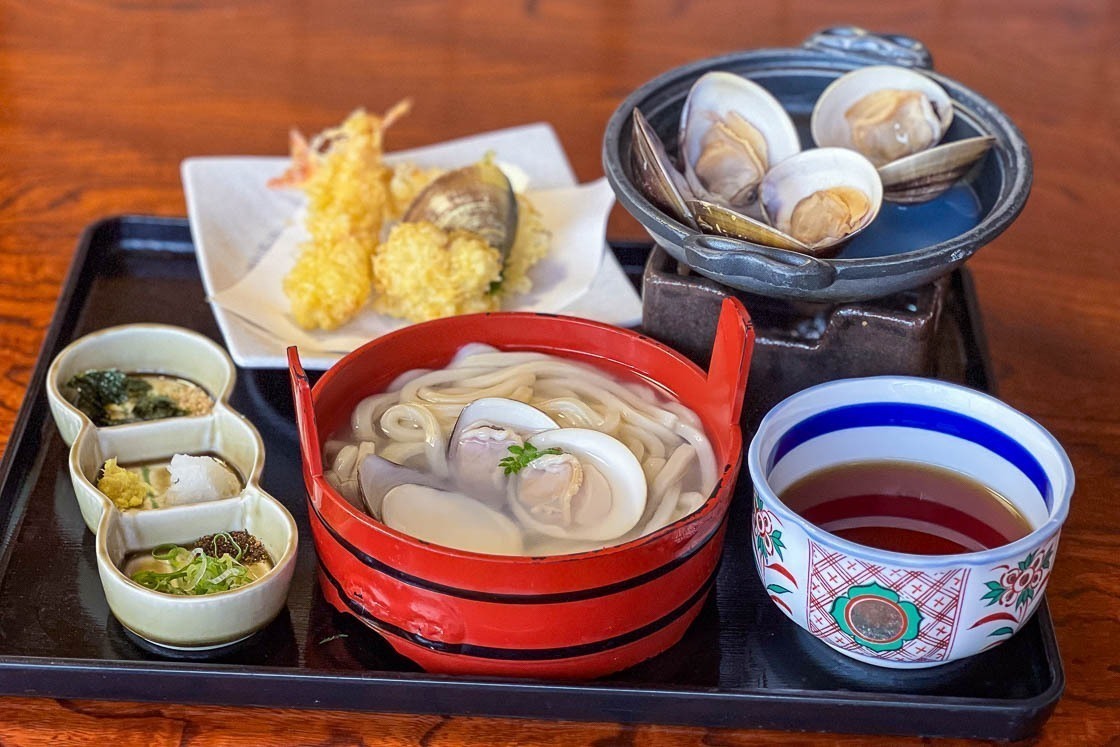
A good next stop is Utaandon, a long-established udon shop founded in 1877. Its menu includes dishes with hamaguri, so it is a useful first taste of the city’s signature ingredient. After lunch, it is easy to continue to Kuwana Soja, also known as Kasuga Shrine, which is the oldest shrine in the city. The shrine grounds include a small sword museum with a precious sword that has an unusually layered history of wartime protection and later restoration.
From the shrine, the route can continue to a sweets stop, then on to an overnight stay if you are spending the night. Casa Watari is a small luxury hotel with only two rooms, and it is closely connected to Kuwana’s post-town history through the Moroto family. If you prefer a fuller sightseeing day rather than an overnight stay, the same central area also connects neatly to Rokkaen, Teramachi Street, Torikatsu, and the return walk toward the station.
What to eat in Kuwana
Hamaguri dishes
If you only have time for one local specialty, make it clam dishes. Kuwana’s hamaguri show up in several forms, and the city’s food identity is built around them. At Utaandon, for example, the menu includes hamaguri tempura udon and grilled hamaguri. At Torikatsu, hamaguri appears in ramen form, which gives travelers a second way to try the same ingredient in a different style.
Local beef
Kuwana’s local beef appears at Edogawa, an izakaya-style restaurant with a broad menu. The beef dish described there is a reminder that Kuwana’s food scene is not limited to seafood. For travelers who want variety in a short stay, this gives the town a useful second anchor beyond clams.
Ramen
Torikatsu is known for hamaguri ramen, and it is one of the most practical lunch stops in town. The restaurant can attract a line even on weekdays, but the queue moves relatively quickly. That makes it a good choice for travelers who want a focused lunch stop in a compact itinerary.
Traditional sweets
Kuwana’s sweets are part of the town’s identity, especially for travelers who want something easy to take away.
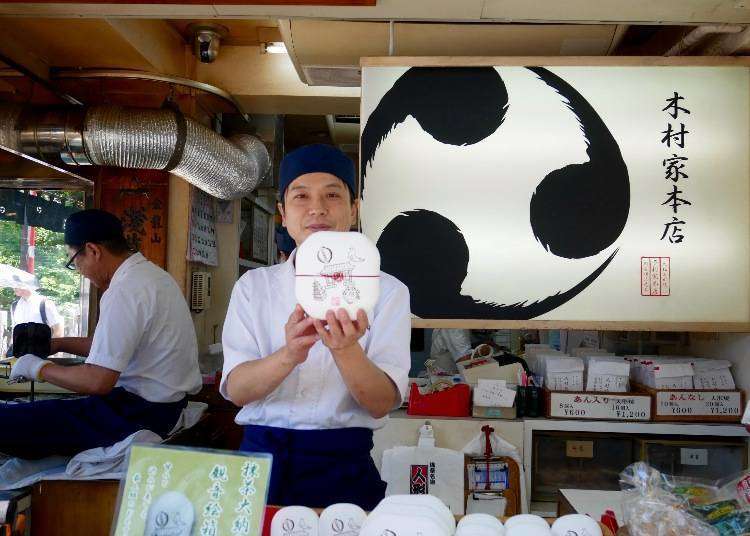
Toraya is one of the city’s long-established sweets shops and is known for Toraya manju, steamed buns filled with sweet red bean paste. Another classic stop is Kashiwaya Yasunagamochi Honpo. Its signature product, Yasunagamochi, is a long, flat, oval grilled mochi with red bean paste and is especially well suited to travelers looking for a sweet souvenir that travels well.
Morning market on Teramachi Street
Teramachi Street adds a very local layer to a food-focused visit. It is a covered pedestrian shopping arcade, and it hosts a morning market on days ending in 3 or 8. On market days, you can expect produce, snacks, homemade lunch boxes, and side dishes. That mix makes it a strong stop for travelers who want to see daily food culture rather than only sit-down meals.
If your timing matches the market, it is an easy place to browse before lunch. If it does not, the street is still useful as part of a walk through the center.
Where history and food overlap
Kuwana works well because the food stops are not separated from the city’s historic core. Shichiri no Watashi, the old Tokaido route, Kuwana Soja, Rokkaen, and the old shopping streets all sit in a compact area. That means you do not have to choose between sightseeing and eating; the two experiences are built into the same route.
Rokkaen is especially interesting for travelers who enjoy seeing how private homes and gardens fit into a city’s story. It was built in 1913 as the Moroto family’s new residence and combines Japanese and Western elements. Visitors can walk around the building and garden, and free guided tours in Japanese are available.
This is the kind of place that makes a Kuwana trip feel richer than a simple restaurant crawl. You get a sense of the family history behind the city’s development, and that context helps explain why some of the town’s finest food stops and heritage sites are tied together so neatly.
How much time to allow
Kuwana works in more than one format. A half-day visit can cover one or two meals plus a short walk through the center. A full day gives you enough time to combine the old crossing site, a shrine visit, a market stop, sweets, and a proper lunch or dinner. A one-night stay is the most comfortable option if you want to slow down, enjoy dinner, and continue sightseeing the next morning without watching the clock.
If your goal is simply to sample local food without leaving the Nagoya area for long, Kuwana is a very manageable choice. If you want a more relaxed pace and a stronger sense of place, overnighting in town can make the experience feel less compressed.
Practical tips for eating and walking in Kuwana
Because the main sights are walkable, comfortable shoes matter more than complex transport planning. The route between the station, the shrine area, the sweets shops, Teramachi Street, and the ramen stop can all be done on foot.
For food planning, it helps to think in layers:
- start with a clam dish for the city’s signature flavor
- leave room for a traditional sweet or two
- add ramen or beef if you want a fuller meal experience
- stop by Teramachi Street if your timing lines up with the morning market
If you are spending the night, Casa Watari offers a very small-scale stay with only two rooms, so it suits travelers looking for a quiet, intimate base rather than a large hotel experience. Rokkaen and the Moroto-related sites can also add depth to an overnight stay.
What to verify before you go
A few details can change, so it is worth checking current information before relying on them:
- restaurant opening hours and holiday closures
- current market operation days or exceptions for the Teramachi Street morning market
- visitor access rules for Moroto Garden
- current display status for the sword at Kuwana Soja
- guided tour availability at Rokkaen
- room availability at Casa Watari
FAQ
How do you get to Kuwana from Nagoya?
Kuwana is about 20 minutes from central Nagoya by local train. The source route information lists both JR and Kintetsu options.
What food is Kuwana best known for?
Hamaguri clams are Kuwana’s signature specialty. The city also has local beef, ramen, and traditional sweets.
Can you explore Kuwana on foot?
Yes. The main sights and food stops discussed here are within walking distance of each other.
Is Kuwana better for a day trip or an overnight stay?
Both work. A day trip is enough for a compact food-and-sights route, while an overnight stay gives you more time to enjoy dinner and move at an easier pace.
When is the Teramachi Street morning market held?
It runs on days with a 3 or an 8 in the date, such as 3, 8, 13, 18, 23, and 28.
What traditional sweets should you try in Kuwana?
Toraya’s Toraya manju and Kashiwaya Yasunagamochi are the most notable sweets mentioned for visitors.
What is hamaguri and why is it famous in Kuwana?
Hamaguri means clam, and Kuwana has long been known for it because the area near the Kiso River and Ise Bay provides the conditions that help the clams grow large and plump.
If you are planning a Nagoya-based itinerary and want an easy food stop with history, Kuwana is a strong candidate for a custom day out or a low-key overnight add-on.