2 Days in Nara and Asuka: A Practical Historical Itinerary
If you want a short trip that goes beyond the usual Japan highlights, Nara and Asuka offer an easy way to follow the story of Japan’s early capitals. Together, they show the transition from moving imperial centers to a more settled capital city, while also giving travelers a mix of temples, palace ruins, countryside cycling, tea, deer, and a quiet heritage stay.
Why Nara and Asuka matter
Asuka and Nara were important in the formation of a centralized government over 1,000 years ago. They also help explain how early Buddhism took root in Japan and how Chinese-inspired ideas influenced palace planning, city layout, and state structure. For travelers, that means this route is not just a list of historical sites. It is a compact way to see how early Japanese history unfolded on the ground.
A simple 2-day route
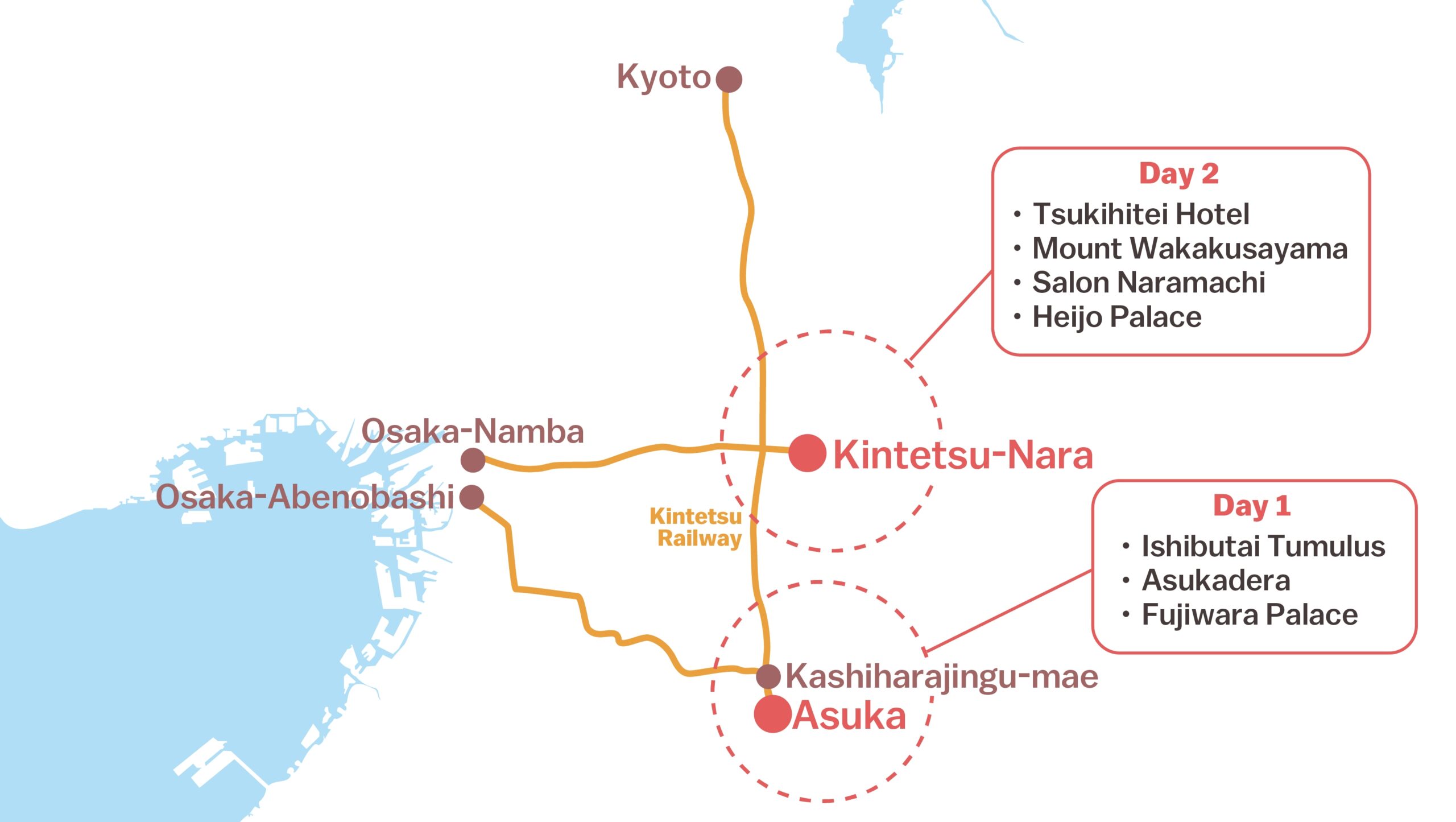
A practical way to experience both places is to split the trip into two clear days:
- Day 1: Asuka for cycling, tombs, temples, and palace remains
- Day 2: Nara for palace ruins, tea, deer, and woodland atmosphere
That structure keeps travel simple and lets you move at an unhurried pace.
Day 1 in Asuka: scenic arrival, bike rental, and historical sites
There are two main ways to reach Asuka from Kyoto or Osaka. One especially scenic option is the Blue Symphony sightseeing train from Osaka. It runs twice a day, in the morning and afternoon, and offers a very different experience from a regular local train, with plush seating, large windows, and a lounge car serving food and drinks. If you want the journey itself to feel like part of the trip, this is a memorable way to begin.
Once in Asuka, renting a bike is the easiest way to move between the area’s historical sites. Cycling gives the day a slow-travel rhythm and makes it easier to connect the different layers of the landscape.
Ishibutai Tumulus
One of the most striking stops is the Ishibutai Tumulus, a rare example of a bare stone tomb without its original earth covering. It is believed to be linked to Soga no Umako, an important figure in the introduction of Buddhism to Japan and in the development of politics and government structure.
Because tombs of this type were usually reserved for very important people, the site offers a strong sense of how significant that era was. It is an especially useful stop for travelers who want to understand the political and religious changes behind Japan’s early centralized state.
Asukadera Temple
A short cycle away is Asukadera, identified as Japan’s first Buddhist temple. It is also associated with the country’s first Buddhist statue, ordered by Soga no Umako in 596.
For visitors interested in Buddhist heritage in Japan, this is one of the most important stops in the itinerary. The temple helps explain how Buddhism moved from a controversial introduction to a major force in Japanese religious and political life.
Fujiwara Palace site
Later in the day, continue to the Fujiwara Palace site. This was created on a Chinese model, with a rectangular street system and city walls, and the area served as the capital for 16 years before the relocation to present-day Nara.
Today the site is a quiet grassy expanse surrounded by rice paddies and homes. As a cycling stop, it provides a calm final pause before returning north toward Nara.
Getting from Asuka to Nara
After your cycling day, the route continues naturally to Nara. A practical pattern is to return the bike at Kashiharaiingu-mae Station and then take the Kintetsu Line north to Kintetsu-Nara Station. That keeps the transfer straightforward and lets you shift from countryside riding to an evening in the city.
Where to stay in Nara
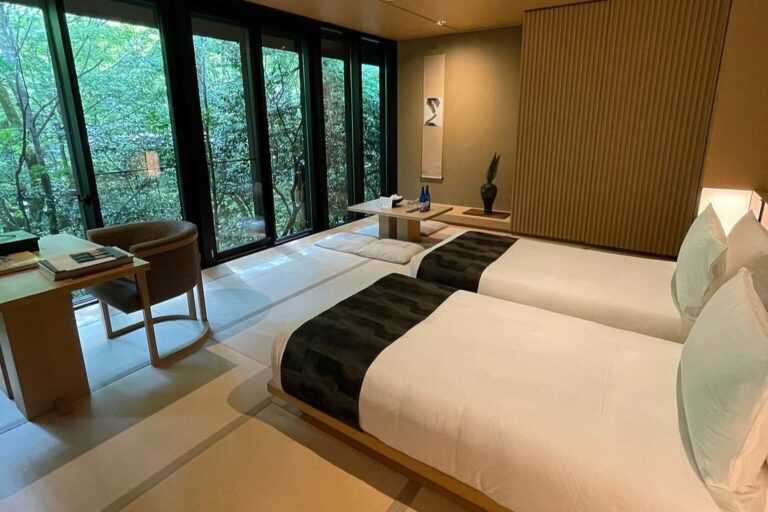
For a quieter, more atmospheric base, Tsukihitei is set in the woodland beside the Kasugayama Primeval Forest. The setting creates a strong contrast with the city and works well for travelers who want the trip to feel restful as well as historical.
The stay described here included several-course dinners featuring local, seasonal ingredients, along with a traditional breakfast the next morning. The room also included a private bath and a mini fridge. Because accommodation details can change, travelers should verify the current stay format before planning around it, but the wooded location itself is central to the appeal.
Day 2 in Nara: nature, tea, and palace ruins
Nara is not only a built-up city with shops and cafes. It also rewards travelers who go beyond the most familiar sights and look at its historical roots. This second day combines nature and culture in a way that fits the city well.
Mount Wakakusayama
Start with Mount Wakakusayama for a view over the city and toward Heijo Palace. It is a useful way to place the day’s historical sites in the wider landscape before heading into the palace area.
Naramachi tea stop
On the way, a stop in Naramachi adds a more relaxed cultural break. Among old merchant buildings, you can find a tea space with fabrics and ceramics at the front and a café area with a Japanese garden at the back. A tea-and-sweet pause here gives the itinerary a slower, more intimate dimension.
Heijo Palace: the heart of Nara’s capital story
The key historical stop in Nara is Heijo Palace. This was the capital site established by Empress Genmei on a Chinese model, with rectangular streets and city walls. It was intended to be Japan’s first permanent capital, marking an important shift away from earlier capitals that moved with each emperor.
Several features make the site worth time rather than a quick photo stop:
- Suzaku Gate, the entrance to the palace area
- a wide central approach leading toward the former city center
- the East Palace Garden, where an original artifact is believed to remain in its original placement
- the Former Audience Hall, where major events such as New Year celebrations and imperial announcements took place
The palace grounds also include reconstructed structures, including a replica mission ship to China near the entrance. These reconstructions help visitors imagine the cross-cultural exchanges that shaped the capital.
For planning purposes, the Heijo Palace Site Museum is free, open from 9:00 am to 4:30 pm, with last entry at 4:00 pm. It is closed on Mondays, or the following weekday if Monday is a national holiday, and during the New Year holidays. The museum is about a 10-minute walk from Kintetsu Yamato-Saidaiji Station.
What this itinerary adds beyond a standard Nara visit
Many travelers first encounter Nara through its deer and central sights, but this itinerary adds more historical depth. Asuka explains the early stage of Japan’s political and religious transformation, while Nara shows the move toward a more permanent capital.
Together, the two places give you:
- a clearer sense of Japan’s ancient capitals before Kyoto
- an easy cycling day in Asuka
- an understanding of early Buddhism in Japan
- a look at palace planning based on Chinese models
- a quieter, more atmospheric way to experience Nara
That makes the route especially useful for travelers who prefer culture and context over checklist sightseeing.
Practical planning tips
A few simple decisions can make the trip smoother:
- Use the Blue Symphony if you want the rail journey to feel special.
- Plan Asuka as a cycling day so the historical sites connect naturally.
- Stay overnight in Nara if you want to enjoy the woodland setting and keep Day 2 unhurried.
- Check current opening details for sites and transport before departure, especially if you want to rely on a specific museum visit or train connection.
Who this trip suits best
This itinerary is a strong fit for travelers who want a short cultural journey from Kyoto or Osaka and are interested in early Japanese history, Buddhist heritage, and slower exploration. It also works well for visitors who like a route with a clear structure rather than a loose collection of stops.
FAQ
What is the historical significance of Asuka and Nara?
They were important ancient capitals before Kyoto and played a key role in the development of Japan’s centralized government.
How do you get to Asuka from Osaka or Kyoto?
The trip can begin from either Kyoto or Osaka. One scenic option is the Blue Symphony sightseeing train from Osaka.
Is cycling a good way to see Asuka?
Yes. Renting a bike is a practical way to connect the main historical sites in Asuka.
What are the key sites to visit in Asuka in one day?
The main stops highlighted here are Ishibutai Tumulus, Asukadera, and the Fujiwara Palace site.
What should I see at Heijo Palace in Nara?
Suzaku Gate, the East Palace Garden, the Former Audience Hall, and the broader palace grounds are the most important parts of the visit.
Where can I stay if I want a quieter base in Nara?
Tsukihitei is set in woodland beside the Kasugayama Primeval Forest and offers a calm, atmospheric stay.
Can this itinerary be done as a short cultural trip from Kyoto or Osaka?
Yes. The route is designed as a manageable 2-day trip and works well as a short add-on to a wider Japan itinerary.
Plan a tailored Nara and Asuka route
If you want to combine rail travel, cycling, temple visits, palace ruins, and a heritage stay into one smooth trip, a custom Nara and Asuka itinerary can help you sequence it all without wasting time between stops.