Hokkaido Autumn Foliage: When to See Fall Colors and the Best Places to Visit
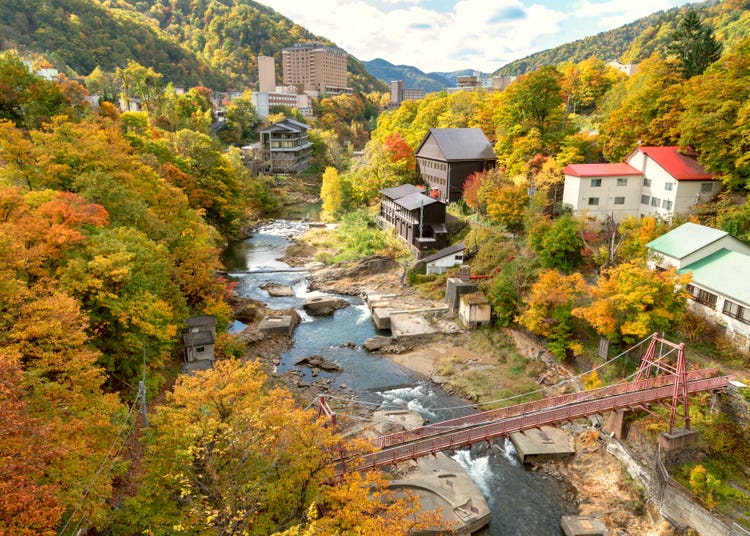
Hokkaido is one of the first places in Japan to enter autumn foliage season. Because temperatures are generally lower than on Honshu, the colors arrive earlier, with the season typically beginning around mid-September. For travelers planning a fall trip, that makes Hokkaido especially useful if you want to catch red and yellow leaves before they reach many other parts of Japan.
What makes Hokkaido autumn foliage distinctive is the mix of colors. Broadleaf trees and conifers grow together across the mountains, so you often get red, yellow, and green at the same time rather than a single uniform wave of color. That layered look is part of the appeal, especially in mountain areas, hot spring towns, and even within Sapporo itself.
Hokkaido autumn foliage calendar: how the colors move
The autumn colors start in the mountains and then move south. In practice, that means high-altitude areas and the Daisetsuzan region tend to change first, followed by other mountain and hot spring areas, and then city foliage later in the season.
The broad seasonal pattern looks like this:
- Mid-September: the earliest mountain colors begin
- Late September to mid-October: central scenic and onsen areas begin to peak
- Mid-October to early November: Sapporo city spots and yellow ginkgo views become stronger
- Early November: the later seasonal window for red leaves in Hokkaido
That timing gives travelers a lot of flexibility. If you want the earliest color, focus on the mountains. If you prefer a calmer itinerary based around Sapporo, later October often works better.
Best places to see autumn leaves in Hokkaido by timing
Earliest mountain colors: Mount Asahidake
Mount Asahidake is one of the earliest places in Japan to see autumn color. The best viewing season is described as mid to late September, while the best time to visit Mount Asahi in autumn is October 14 to October 24.
This area is reached from Asahidake Onsen Sanroku Station, where a ropeway ride takes about 10 minutes to Sugatami Station. From there, it takes about an hour on foot to reach several observation points, including the First, Fourth, Sugatami, and Fifth Observation Points. Travelers can view Mount Asahi, which is Hokkaido’s tallest mountain, and also see its reflection on Sugatami Pond.
The mountainside is filled with Japanese rowan and Erman’s birch, creating strong red and yellow tones. If your goal is to be among the first people seeing fall colors in Hokkaido, this is the place to start.
Waterfall scenery and colored cliffs: Sounkyo
Sounkyo is a hot spring area east of Asahikawa, set along the Ishikari River. In autumn, the cliffs and Mount Kuro turn red and yellow, and the valley scenery becomes especially dramatic.
The best time to visit Sounkyo in autumn is October 9 to October 18. One of the most scenic places here is the pair of waterfalls, Ginga Falls and Ryusei Falls. They are about a 5-minute drive from Sounkyo Onsen on National Route 39, and after a 20-minute climb from the parking lot, you reach the Sobakudai observation deck. From there, you can see both waterfalls and the fall colors spreading across the cliffs.
This area combines mountain scenery, waterfalls, and onsen in a way that works well for travelers who want a more dramatic landscape than a simple garden or park walk.
Hot springs and steam: Noboribetsu Jigokudani
Noboribetsu Jigokudani offers a very different kind of autumn view. Instead of wide mountain slopes, you get steam vents, bubbling hot springs, sulfur-coated hills, and a volcanic crater landscape around a diameter of 450 meters.
The best time to visit is mid-October. Wooden paths let you walk through the area while viewing Japanese rowan, Japanese sumac, and Erman’s birch in autumn color. The contrast between the rising steam and the leaves makes this one of the most atmospheric fall foliage settings in Hokkaido.
Easy day-trip foliage from Sapporo: Jozankei Onsen
If you are based in Sapporo, Jozankei Onsen is one of the easiest autumn foliage escapes. It is located in the southern part of the city and is described as Sapporo’s Okuzashiki, or hot spring retreat.
The best time to visit Jozankei in autumn is late September to mid-October. The area has a valley path for relaxed walking, and the view from Jozankei Futami Suspension Bridge, about a 10-minute walk from the hot spring district, is especially notable. There are also free foot baths, so you can pair the scenery with a casual onsen-style break.
For travelers who want fall leaves without leaving the Sapporo area for too long, this is one of the most practical options.
City foliage in Sapporo: Nakajima Park
Nakajima Park is a good choice when you want autumn color without a long transfer. It sits about 3km south of JR Sapporo Station, beyond Susukino, and is one of Japan’s City Parks as well as one of Japan’s Top 100 Historical Parks.
The best time to visit is mid-October to early November. Inside the park, a path lined with ginkgo trees leads into a large pond that reflects the fall colors. The park also includes a concert hall and important cultural properties such as Hoheikan and Hassouan, so the experience is not only about the leaves but also about the urban setting and historic buildings around them.
Sapporo garden color: Hiraoka Jugei Center
Hiraoka Jugei Center, also called Midoream, is another strong Sapporo option for autumn. Its best viewing window is mid to late October.
The garden includes both Japanese-style and western-style areas. It is known for the red tunnel formed by Nomura momiji, and the design garden with around 3,000 Japanese yew trees cut into cone and round shapes also stands out. The center has many visitors during the foliage season, and it gives you a more garden-focused experience than Nakajima Park.
Late-season yellow leaves: Hokkaido University Icho Namiki
For ginkgo color in Sapporo, Hokkaido University Icho Namiki is a strong late-season stop. The best time to visit is late October to early November.
The campus lies on the northern side of Sapporo Station and includes the Hokkaido University Museum and the historical Sapporo Agricultural College Farm No. 2. Along the 380-meter avenue, around 70 Japanese yew trees turn yellow and create an arching tunnel effect.
If you are staying in Sapporo in late autumn, this is one of the most convenient places to catch the yellow-leaf season before it fades.
High-altitude views in the far east: Shiretoko Pass
Shiretoko Pass is the dramatic high point of Shiretoko Odan Road in the Shiretoko Peninsula. The best time to visit is early to mid-October.
At 738 meters above sea level, the pass offers views of Mount Rausu and, across the Nemuro Strait, Kunashir Island. The slope is covered with Japanese stone pine, while Erman’s birch and Japanese rowan turn yellow around it. There is a parking area at the pass, making it easy to stop and take in the scenery.
This is a strong choice if your itinerary reaches the Shiretoko area and you want a wide, open autumn landscape rather than a city or onsen setting.
How to build a Hokkaido fall foliage itinerary
The easiest way to plan a Hokkaido autumn trip is to match your travel dates with the region that is peaking.
- For mid to late September: focus on Mount Asahidake and the earliest mountain color
- For early to mid October: add Shiretoko Pass, Sounkyo, and other mountain-to-valley landscapes
- For mid October: combine Noboribetsu Jigokudani with a Sapporo base or onsen stop
- For late September to mid October: include Jozankei Onsen if you are staying near Sapporo
- For mid to late October: plan Sapporo city foliage at Nakajima Park and Hiraoka Jugei Center
- For late October to early November: finish with Hokkaido University’s ginkgo avenue
If you are using Sapporo as your base, the most practical approach is to pair one nearby day trip, such as Jozankei Onsen, with one or two city foliage stops. If you have more time, mountain and hot spring areas such as Asahidake, Sounkyo, and Noboribetsu add a more scenic contrast.
Practical travel notes
A few details are worth keeping in mind when planning.
Mount Asahidake is reached by ropeway from Asahidake Onsen Sanroku Station, and the ropeway hours vary by season. The area is open daily. The source also lists seasonal admission pricing, so travelers should check the current operating details before relying on a specific travel date.
For Shiretoko Pass, the scenery is tied to the peak of the Shiretoko Odan Road, so weather or road conditions may affect access. It is worth confirming current road status before setting out.
For the Sapporo city spots, access is relatively straightforward compared with the mountain areas, which makes them useful if you want a more relaxed itinerary or a backup plan when weather changes.
Which travelers this season suits best
Hokkaido autumn foliage is a good fit if you want to see fall colors earlier than in much of mainland Japan. It also works well for travelers who like variety: mountain slopes, waterfalls, volcanic steam, hot springs, parks, gardens, and city avenues all appear in the same season.
It is especially useful for:
- Travelers planning a Sapporo-based autumn trip
- Visitors who want an onsen stop with scenic leaves
- People who prefer a clear timing strategy rather than a random sightseeing list
- Travelers building a Hokkaido foliage itinerary around a short autumn window
FAQ
When is the best time to see autumn leaves in Hokkaido?
Hokkaido’s autumn foliage typically begins around mid-September, and the red-leaf forecast for 2026 is early November. The best time depends on the area you want to visit.
Which part of Hokkaido gets fall colors first?
The colors begin at Mount Asahi in the Daisetsuzan Volcanic Group and then gradually move south.
Can you see Hokkaido fall colors in late October?
Yes. Late October is a good time for Sapporo city spots such as Nakajima Park, Hiraoka Jugei Center, and Hokkaido University Icho Namiki.
What is the best autumn foliage spot near Sapporo?
Jozankei Onsen is one of the easiest foliage retreats near Sapporo, and Nakajima Park and Hiraoka Jugei Center are also strong city-based options.
Are there good Hokkaido autumn foliage spots with hot springs?
Yes. Jozankei Onsen, Sounkyo, and Noboribetsu Jigokudani all combine autumn scenery with hot spring settings.
What is the difference between early and late autumn foliage in Hokkaido?
Early autumn is mountain-driven, with places like Mount Asahidake changing first. Later autumn brings more accessible city views, including ginkgo and park scenery in Sapporo.
Planning your Hokkaido autumn trip
If you want to make the most of Hokkaido autumn foliage, the key is to choose your dates based on elevation and region, not just the calendar. Start in the mountains if you are traveling early, add hot spring valleys and waterfalls in the middle of the season, and save Sapporo’s parks and ginkgo avenues for later October into early November.
That approach gives you a much better chance of matching your travel dates to the right colors, and it also makes it easier to build a flexible Hokkaido foliage itinerary around your base city and transfer time.